
Local Legends, Spooky Stories & Halloween Traditions
From Buffalo’s grand old buildings to a mysterious lakeside legend in Rochester, Western New York has plenty of ghost stories to make this Halloween a bit more interesting. Read more if you dare…
There’s something about October that makes an old building look a little more mysterious, a quiet lakeshore feel a little more magical, and a perfectly ordinary creaking floorboard sound like it deserves its own detective investigation.
Maybe it’s the earlier sunsets. Maybe it’s the colorful leaves. Or maybe it’s the fact that Halloween gives us permission to tell a few extra stories around the dinner table.
Here in Western New York, we’ve got plenty of history to work with.
Our region is home to grand railway stations, historic hotels, remarkable architectural landmarks, and places where local legends have been passed down for generations. Some stories involve mysterious figures and unexplained experiences. Others are fascinating simply because of the real people and events behind them.
So, let’s take a family-friendly trip through Western New York’s spooky side. No jump scares required. A little curiosity, a dash of imagination, and perhaps a pumpkin-shaped treat are all you need.
The White Lady of Rochester: A Legend That Won’t Go Away
If Western New York had a local folklore hall of fame, Rochester’s White Lady would deserve serious consideration.
The legend is associated with Durand Eastman Park, along the shore of Lake Ontario in Irondequoit. According to the story, a woman once lived near the lake with her daughter. When the daughter disappeared, the heartbroken mother searched for her along the shoreline, accompanied by two white, wolf-like dogs.
Over time, the story grew into a local ghost legend. Some versions say the woman never stopped searching; others add different details about what happened to her daughter.
It’s the kind of story that practically writes its own autumn scene: a lakeside path, a little mist rolling over the water, and two pale dogs appearing through the fog.
But here’s an interesting twist. The crumbling stone ruins sometimes called the White Lady’s Castle weren’t actually a castle. The William G. Pomeroy Foundation explains that they are the remains of a former lakeside dining hall, or refectory, that once served visitors to the area.
The legend has been passed down in Rochester for generations, and in 2023, a historical marker commemorating the White Lady was unveiled in Durand Eastman Park. The marker recognizes the story as part of New York folklore, not as proof that a ghost exists.
That’s what makes this tale so interesting. A real place, a mysterious story, and generations of people adding their own details have combined to create one of the region’s best-known legends.
The local takeaway: Sometimes, a place becomes famous not just because of what happened there, but because of the stories people tell about it afterward.
Sources: William G. Pomeroy Foundation’s White Lady marker and Monroe County’s announcement of the marker.
Buffalo Central Terminal: All Aboard for a Trip into History
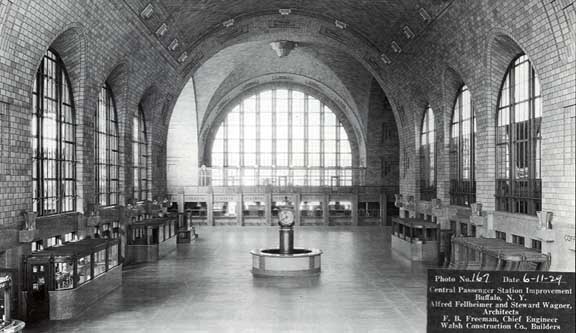
Opened in 1929, this towering Art Deco railway complex was built to handle the hustle and bustle of a busy railroad hub. At its peak, the terminal was designed to serve more than 200 trains and approximately 10,000 passengers a day.
Imagine the scene during its busiest years. Families heading off on vacations, business travelers rushing to make connections, railroad workers keeping everything moving, and passengers watching the clock to make sure they didn’t miss their trains.
It was a place full of arrivals, departures, reunions, and goodbyes.
Then came a very different chapter. As rail travel changed, the terminal’s role declined. The last train departed on October 28, 1979, and the enormous complex entered a long period of uncertainty.
Its size and distinctive architecture have since made it a favorite subject of Buffalo history enthusiasts and storytellers. Local paranormal folklore has also included the terminal among places associated with ghost stories, although claims about particular apparitions or unexplained sounds shouldn’t be confused with verified historical events.
Today, the Buffalo Central Terminal is the focus of a major preservation and revitalization effort, with a vision for a new future as a community destination.
There’s something wonderful about that. A building once designed to connect people traveling across the country is finding new ways to connect people right here at home.
And if you ever find yourself looking up at its unmistakable tower, remember that the most remarkable thing about the terminal isn’t a supposed ghost. It’s the thousands of real people whose journeys once passed through its doors.
The local takeaway: Sometimes the best way to appreciate a place’s mysteries is to learn about the real lives that made its history.
Source: Buffalo Central Terminal’s official history and restoration project. Check the official website for current access information, as interior tours may be affected by restoration work.
The Richardson Olmsted Campus: A Landmark with Layers of History
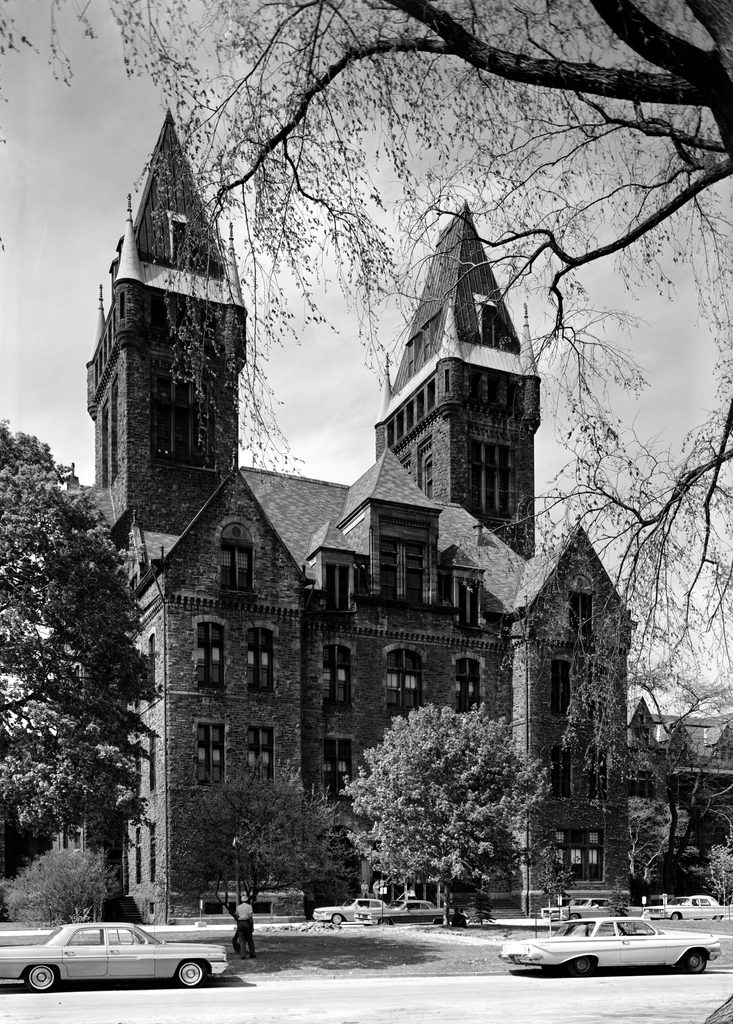
Buffalo’s Richardson Olmsted Campus looks like something out of a storybook.
Its enormous sandstone buildings, distinctive towers, and sweeping grounds make it one of the region’s most recognizable architectural landmarks. It’s easy to see why a place with such a dramatic appearance has captured people’s imaginations.
But its real story is even more important than its appearance.
Designed by architect Henry Hobson Richardson in collaboration with landscape architects Frederick Law Olmsted and Calvert Vaux, the complex began construction in 1872 and opened in 1880 as the Buffalo State Asylum for the Insane.
Its design reflected nineteenth-century ideas about mental health care, including the belief that natural light, fresh air, and access to the outdoors could contribute to treatment. Those ideas were part of a larger movement in psychiatric care, although medical practices and understandings of mental illness have changed considerably since then.
The institution operated on the campus until 1974. Over time, parts of the historic complex fell into disuse, prompting efforts to preserve the buildings and give them a new purpose.
The campus was designated a National Historic Landmark in 1986. Today, the restored property includes the Richardson Hotel and other spaces connected to the site’s continuing redevelopment.
The campus has also attracted ghost stories and paranormal speculation. Those stories are part of its modern folklore, but they aren’t evidence of supernatural activity.
And there’s an important reason to approach this site thoughtfully. Its history involves people who lived with mental illness and received care in an era when treatment options and patients’ rights were very different from today’s standards. That human history deserves more than a spooky label.
The next time you see a photograph of the Richardson Olmsted Campus, take a closer look at its architecture. Then imagine the enormous changes the buildings have witnessed, from their opening in the nineteenth century to their modern restoration.
It’s a reminder that historic places can be mysterious, beautiful, and meaningful without needing to prove anything paranormal.
The local takeaway: A building’s most compelling stories are often the ones we can uncover through history, architecture, and the people who once walked its halls.
Source: Richardson Olmsted Campus: Historical overview.
Iron Island Museum: A Neighborhood Building with Several Lives
Some of the most interesting places in Buffalo aren’t enormous landmarks or famous tourist attractions. They’re the neighborhood buildings that have quietly changed along with the people around them.
The Iron Island Museum, on Lovejoy Street, is a good example.
The building began as a Methodist Episcopal church, completed in 1885. Later, it was used as a funeral home, with rooms adapted for funeral services. In 2000, the building found a new purpose as a community museum.
Today, the museum houses a collection of donated objects and artifacts connected to local history. Visitors can encounter railroad memorabilia, military uniforms, photographs, and other pieces that help tell the story of the surrounding community.
The building’s past has also helped inspire its reputation among people interested in paranormal investigations. But it’s worth separating that reputation from what can actually be established: the church, funeral home, and museum chapters are documented, while claims about supernatural activity remain unverified.
Even without those claims, the building has a fascinating story. Think about how many different reasons people have had to walk through its doors over the decades: attending church, saying goodbye to loved ones, preserving neighborhood history, or exploring the collections inside.
Each chapter has added something to the building’s identity.
For families interested in local history, places like the Iron Island Museum offer a reminder that history isn’t just about presidents, famous athletes, and major events. It’s also about the buildings, objects, and community organizations that help preserve everyday memories.
The local takeaway: Sometimes, the most interesting thing about an old building is discovering how many different roles it has played in its community.
Source: Iron Island Museum’s official website and building history. Check directly with the museum for current opening hours and visitor information.
Forest Lawn Cemetery: More Than a Place of Rest
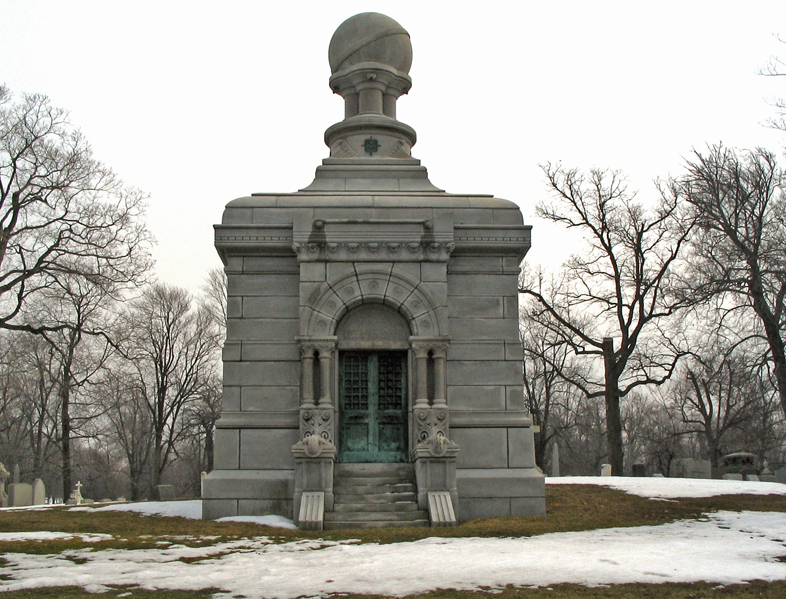
Forest Lawn Cemetery might seem like an unusual destination for a family-friendly fall outing, but it’s also one of Buffalo’s important historic landscapes.
Established in 1849, Forest Lawn was designed as a rural cemetery, a concept that combined burial grounds with carefully planned landscapes. Instead of a crowded, tightly packed setting, the design incorporated rolling hills, winding roads, trees, valleys, and lakes.
The result is a place that feels very different from what many people imagine when they hear the word cemetery.
Forest Lawn covers 269 acres and is the final resting place of more than 165,000 people. Among them are former U.S. President Millard Fillmore and musician Rick James, along with many other people who shaped the history of Buffalo and the wider world.
Its monuments, sculptures, and historic memorials tell stories about the region’s past. The grounds also provide a habitat for wildlife and a peaceful landscape within the city.
Like many historic cemeteries, Forest Lawn has inspired folklore and stories about its older sections. One name that appears in local spooky storytelling is the Blue Lady, described in some retellings as a mysterious blue figure. However, we haven’t established reliable historical evidence for the legend’s origins or for claims of sightings, so it’s best not to present those details as fact.
Fortunately, there’s plenty to discover without needing a ghost story.
Forest Lawn offers tours, lectures, concerts, and other programs that help visitors learn about the people buried there, the cemetery’s landscape design, and the history preserved in its monuments.
Its guided history tours can be an especially interesting way to learn about Buffalo through the lives of the people who called it home.
A visit also offers a gentle reminder that historic places are about more than dates and names. They’re about real people, their accomplishments, their families, and the memories they leave behind.
The local takeaway: Some of Western New York’s most interesting history can be found in places created to remember the people who helped build our communities.
Sources: Forest Lawn’s official history and visitor information. Check its official website for current tours, programs, and visiting guidance.
Statler Buffalo: A Grand Hotel from Buffalo’s Boom Years
Buffalo’s historic buildings have plenty of personality, and the Statler is one of downtown’s most recognizable examples.
The Hotel Statler at Niagara Square was completed in 1923, during a period when Buffalo was an important center of business, industry, and travel.
Hotelier Ellsworth Statler had built his reputation on making hotels more comfortable and convenient for ordinary travelers as well as wealthy guests. The new Buffalo hotel reflected that approach, with amenities that helped establish a new standard for hotel accommodation.
The property was part of an era when a trip to a major city could mean dressing up for dinner, attending a grand ballroom event, or meeting colleagues in an elegant hotel lobby.
Over the decades, the building’s role changed. The hotel operation eventually closed, the property became known as Statler City, and later owners began working to give the landmark a new future.
The building’s history is documented, but colorful stories about famous visitors or alleged spirits should be checked individually before being repeated as fact. We don’t need to embellish its past to appreciate what it represents.
The Statler tells a story about Buffalo’s ambitions during the twentieth century, the evolution of hospitality, and the ongoing challenge of preserving historic buildings for future generations.
And for a Halloween article, it’s a good reminder that an imposing old building can inspire curiosity simply because it has witnessed so much change.
The local takeaway: Buffalo’s architectural landmarks are time capsules, offering glimpses of the city’s changing fortunes, tastes, and traditions.
Source: Statler Buffalo’s official history.
Why Do We Love a Good Local Legend?
After exploring all these historic places, there’s a bigger question worth asking: Why do ghost stories and local legends stick around?
Part of the answer is that they give familiar places a little extra mystery.
A building that we might otherwise pass without a second glance becomes more interesting when we learn about its past. A lakeside park takes on a new character when we hear a story associated with its ruins. A historic railway station becomes more vivid when we imagine the travelers who once filled its concourse.
Folklorists study how these stories develop, change, and travel through communities. Buffalo Toronto Public Media explored Western New York’s supernatural folklore in a 2024 report featuring local researcher Mason Winfield, who discussed the way ghost stories become attached to historic places and architectural features.
These stories can tell us something about the people who share them, too. They reveal what a community remembers, which places capture its imagination, and how one generation passes a story to the next.
Of course, a legend isn’t the same thing as a verified historical account. A story about a mysterious figure doesn’t establish that the figure existed, and a report of an unexplained sound doesn’t establish its cause.
But folklore can still be worth exploring. A legend can be an important part of a community’s cultural history even when its supernatural details remain unproven.
That’s one reason local history is so much fun: it gives us a way to enjoy a good story while learning to ask questions about where it came from.
And if a story sends you looking up an old photograph, reading a historical marker, or asking a family member what they remember about a neighborhood, even better.
WNY Halloween Traditions Have Their Own History
Of course, Western New York’s spooky season isn’t just about historic buildings and ghost stories. It’s also about the traditions that make October feel like October.
Pumpkin carving, costumes, neighborhood decorations, and trick-or-treating are now familiar parts of Halloween. But these traditions developed over centuries rather than appearing all at once.
Halloween’s history includes influences from the ancient Celtic festival of Samhain, Christian observances associated with All Saints’ Day, and customs brought to North America by European immigrants. The exact connections between these traditions and modern Halloween practices are complex, but they help explain how the holiday evolved.
Trick-or-treating, in particular, has a fascinating history. Older European customs involved going door to door for food or other offerings, while the modern American practice of children in costumes collecting treats became increasingly popular during the twentieth century, especially after World War II.
And then there are the little traditions that families create for themselves.
Maybe your family carves pumpkins together every year. Maybe there’s an annual contest to see who can make the funniest costume. Maybe your neighborhood has one house that goes all out with decorations, or a particular candy that everyone hopes to find in their bag.
Those traditions might not appear on a historical marker, but they’re part of the stories families will remember years from now.
Here in Western New York, October brings its own familiar details: colorful trees, chilly evenings, fall festivals, and the annual challenge of figuring out how to wear a costume over a warm jacket.
Sometimes, the scariest part of Halloween is discovering that your child has outgrown their costume the night before the school parade.
Now that’s a Western New York Halloween story worth passing down.
Sources: Smithsonian Magazine’s history of trick-or-treating and HISTORY’s overview of Halloween.
Make Your Own Western New York History Hunt
Want to turn all this local history into a family activity?
Pick one of the landmarks in this article and see what you can discover about it. You don’t need a nighttime ghost tour or a dramatic soundtrack. A little curiosity will do just fine.
Here are a few ideas:
- Become an architecture detective. Look at photos of the Richardson Olmsted Campus or Buffalo Central Terminal. What shapes, towers, and decorative details can you spot?
- Follow a local legend. Read the story of Rochester’s White Lady, then look into the historical marker that commemorates it. Can you separate the legend’s details from the facts about the location?
- Explore a neighborhood museum. Learn about the Iron Island Museum and the kinds of objects it preserves. What everyday items from your own family might tell future generations a story?
- Discover the people behind the history. Browse Forest Lawn’s official resources and choose a person whose life you’d like to learn more about.
- Start a family tradition. Ask parents, grandparents, or other relatives about the Halloween memories they still talk about. Was there a favorite costume, a memorable neighborhood, or a tradition that has disappeared?
For any in-person visit, check current opening hours, tour schedules, and access restrictions first. Historic properties and cemeteries may have rules about where visitors can go, and some buildings are not open for general access.
The goal isn’t to prove that a place is haunted. It’s to discover something new about the region we call home.
Keep the Stories Going
Western New York has no shortage of fascinating history, and Halloween gives us a fun excuse to explore a few of its more mysterious corners.
From the White Lady legend in Rochester to Buffalo’s remarkable historic buildings, these stories connect us to the places, people, and traditions that have shaped our region.
Some stories are supported by historical records. Others belong to folklore, passed down and reshaped through generations. Knowing the difference doesn’t make them less interesting. It makes the stories richer, because we can appreciate both the facts and the ways people have imagined the past.
And the next time someone mentions a supposedly haunted building, you can do more than ask whether they believe in ghosts. You can ask what the building was originally used for, who designed it, what happened there, and how the legend began.
That might be the best kind of Halloween discovery: finding out that the real history is every bit as interesting as the story.
So enjoy the pumpkins, share a few family-friendly legends, learn something new about your hometown, and keep asking questions.
Because around here, the past is full of stories worth telling.
Happy Halloween, Western New York!
And, if we missed any important places or lore, please share in the comments section below.
Photo Credits
Photo: Walden-Myer Mausoleum at Forest Lawn Cemetery (Buffalo, New York), March 2005 by Bigblok403 / Wikimedia Commons (Public Domain)
Photo: Passenger concourse looking west at the Buffalo Central Terminal (June 11, 1929) by Fellheimer & Wagner / via Buffalo Architecture and History (Public Domain)
Photo: The H.H. Richardson Complex Administration Building (1965) by Jack E. Boucher / Library of Congress (Public Domain)